JP Morgan

When I joined Aumni, it was a read-only platform—accurate but inflexible. As part of the product team, I helped introduce interactive features that let investors upload and compare their own cap tables and update valuations in real time, transforming Aumni into a trusted, dynamic workspace for investors.

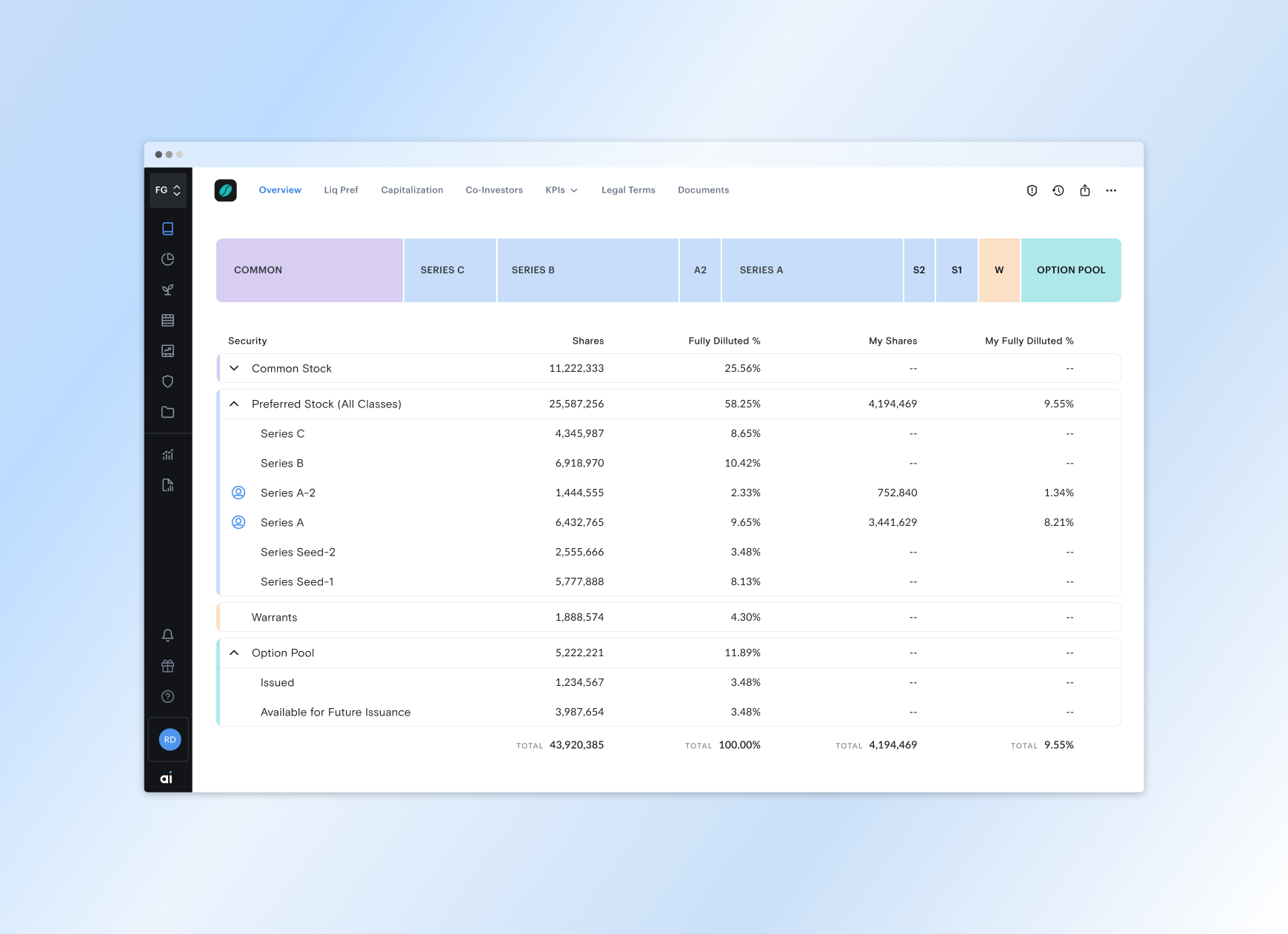

When I joined Aumni, it was a read-only platform. Investors uploaded legal deal documents, Aumni’s team parsed them, and users consumed the resulting insights. The system created trust — every number was sourced from signed legal documents — but it also created friction. Users wanted to move faster, explore their data, and tell their own stories without waiting for documents to be processed or corrected.
The challenge was clear:
How do we give users the freedom to interact with their data without compromising trust?
Investors relied on Aumni’s accuracy but were frustrated by its rigidity.
They needed:
Aumni’s read-only model couldn’t support both — trust and control were in tension.

In user interviews with firms like a16z, General Catalyst, and Forerunner, we learned that investors viewed their data as living. They wanted a platform they could trust for source-backed accuracy and rely on as a workspace for real-time updates and modeling. The solution wasn’t “editable data" - It was a trusted, transparent system of contribution.
We introduced the ability for users to input their own first-party data directly into Aumni — the biggest product strategy change in the company’s history.
It created a hybrid model:
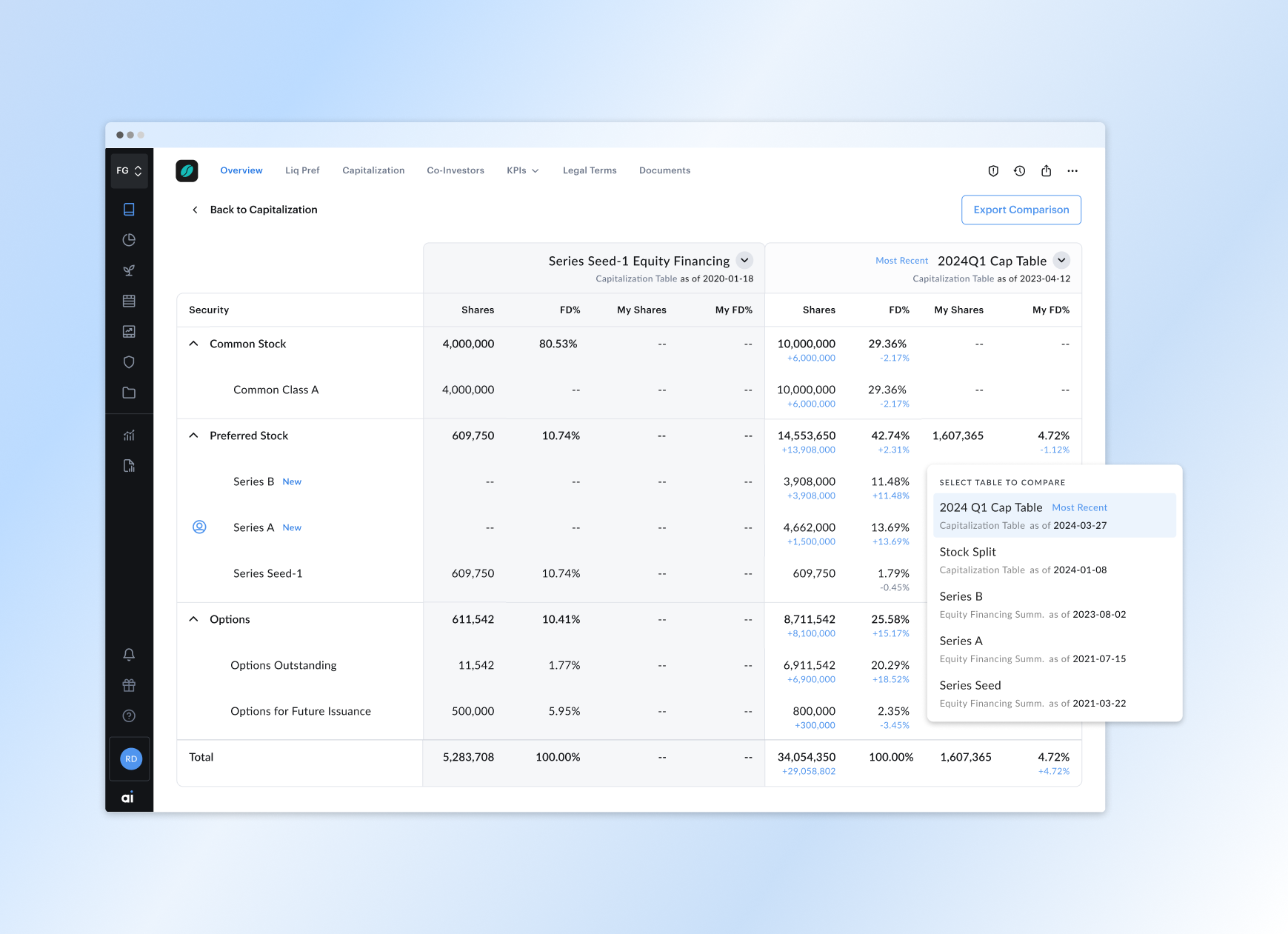
The first feature to use this new model let investors upload and compare their own cap tables:
This was the first time users saw their data reflected live in the platform — immediate and interactive.
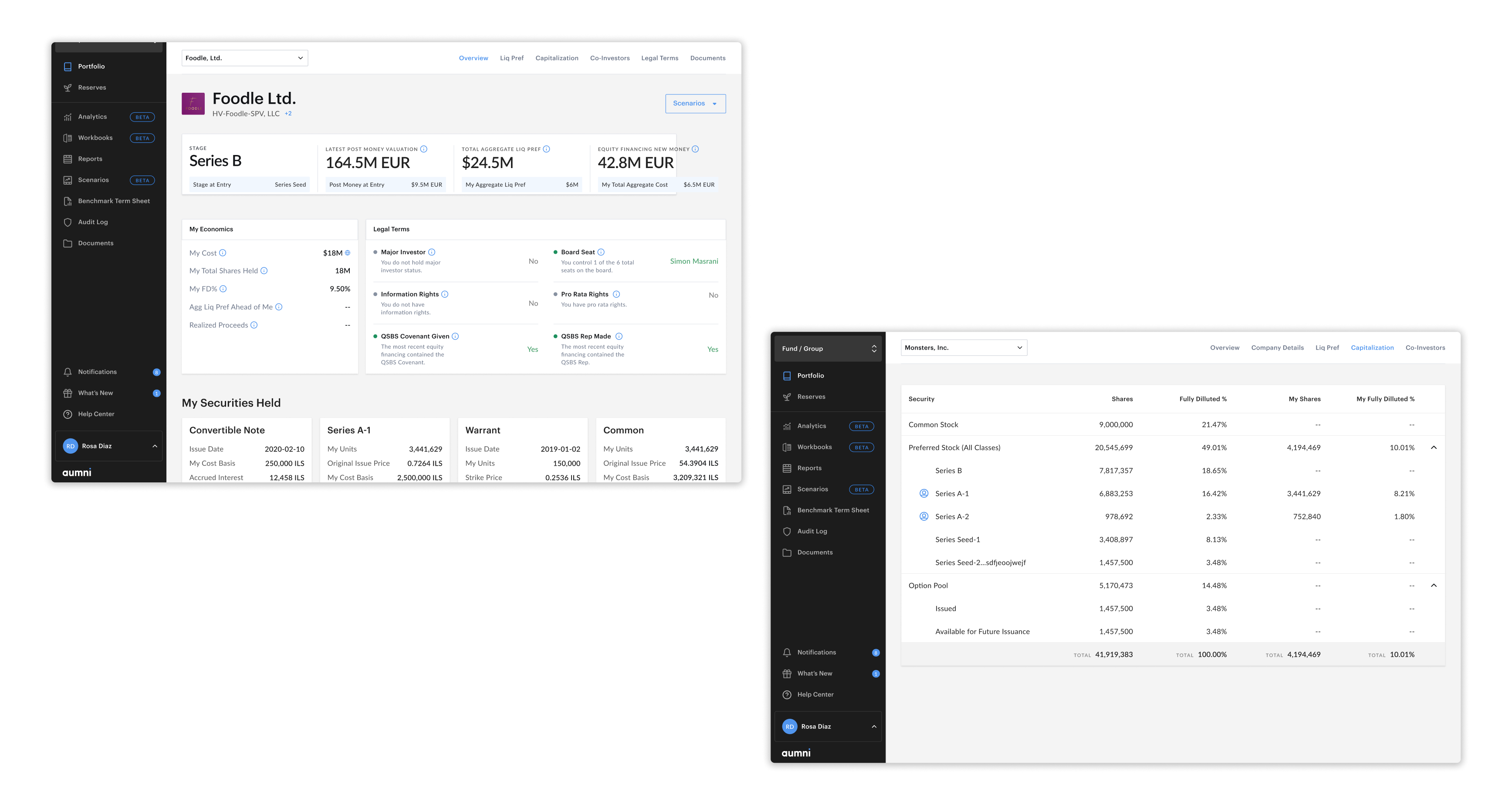
We extended that interactivity to the Investee Overview Page — a high-level snapshot of each portfolio company.
Here, users could:
Every design decision balanced credibility with control — showing users what was sourced, what was entered, and what had changed.